3D Printed vs MDF vs Resin Terrain: Which Should You Buy?
Choosing terrain for your tabletop comes down to three main types: 3D printed, MDF, and resin. In short: 3D printed terrain gives the best mix of detail, modularity, and price for most players; MDF is the cheapest and fastest to set up; and resin offers the finest detail but costs the most and is the most fragile. This guide explains the differences so you can pick the right scenery for different games.
Quick answer (TL;DR)
- Best all-round value: 3D printed terrain — detailed, modular, fair price.
- Cheapest / fastest: MDF — flat-pack, light, easy to store, less realistic.
- Most detailed / most fragile: resin — beautiful, heavy, expensive, can chip.
- Best for new players: start with a small 3D printed modular set you can rearrange every game.
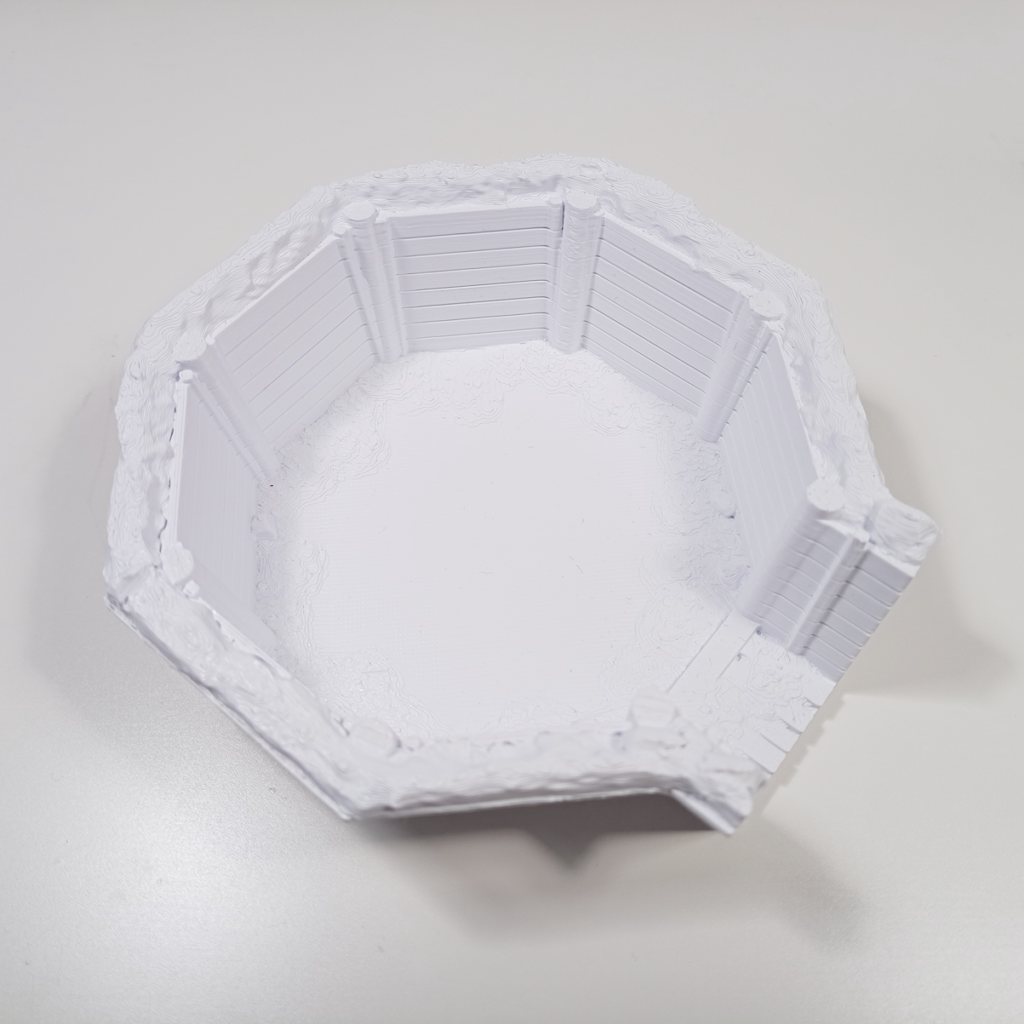
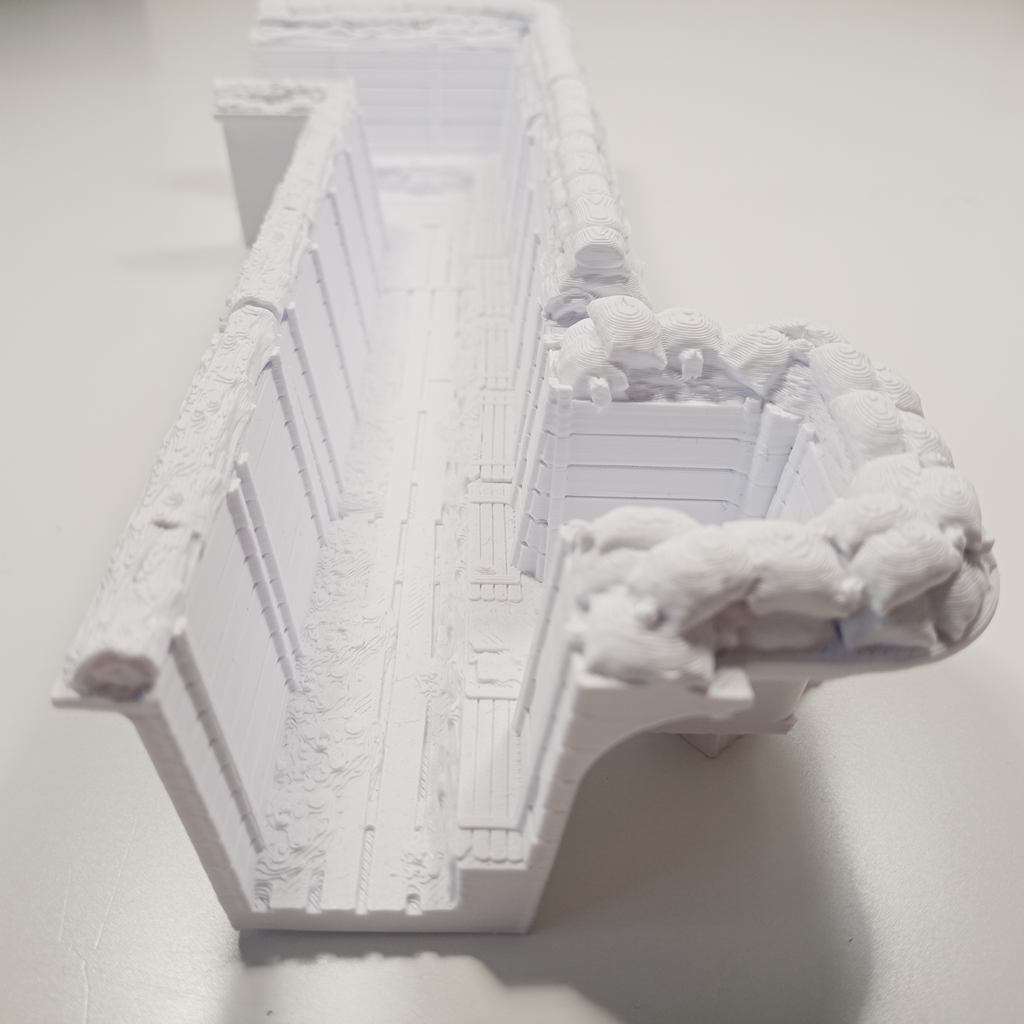
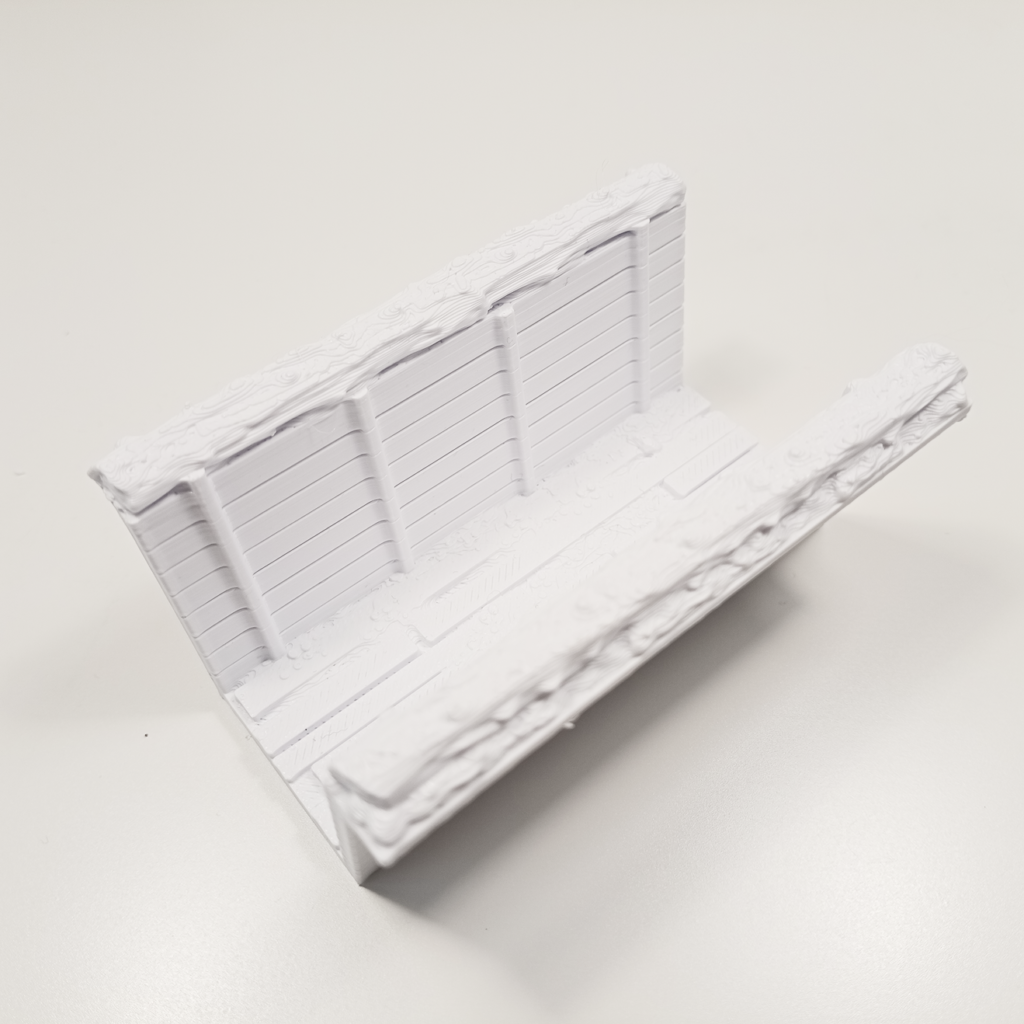
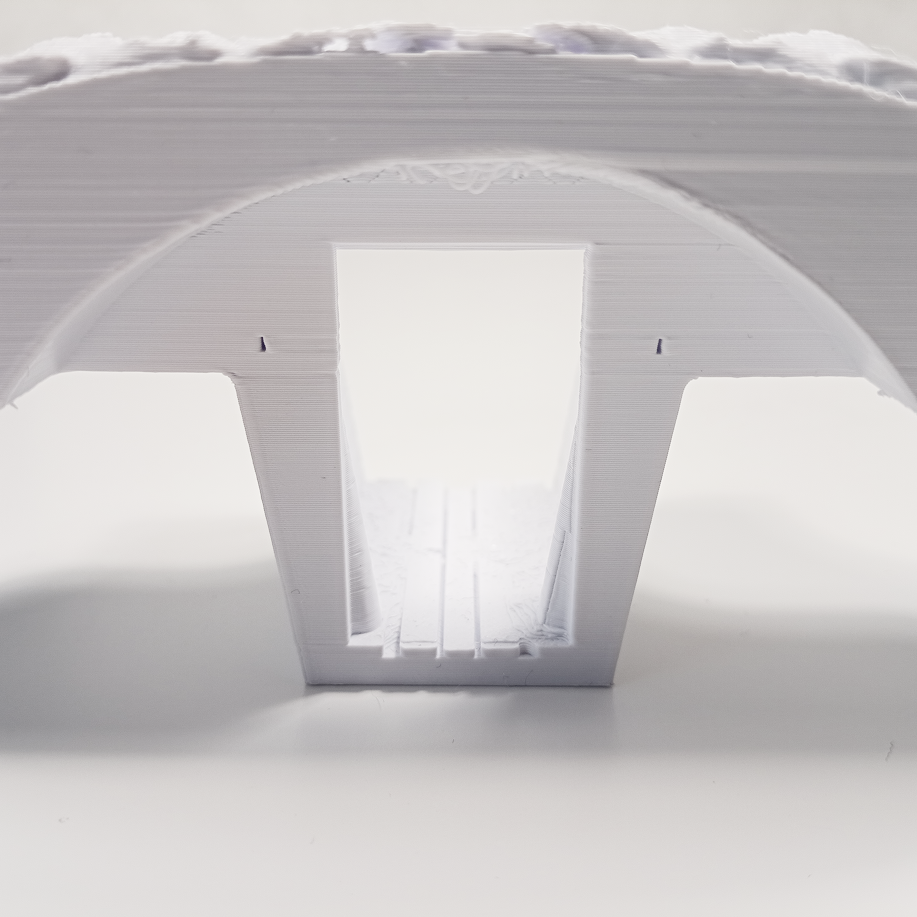
What are the three types of terrain?
Terrain (also called scenery) is the buildings, ruins, trenches, and obstacles that turn a bare table into a battlefield. It gives your miniatures cover, line-of-sight blocks, and objectives to fight over. Today it usually comes in one of three materials.
3D printed terrain is made on an FDM (plastic filament) or resin 3D printer. Designers model the piece in software, then print it layer by layer. It can be modular, highly detailed, and produced in any quantity.
MDF terrain is laser-cut from flat sheets of engineered wood. You punch the pieces out and glue them together like a model kit. It is light, cheap, and stores flat.
Resin terrain is cast in moulds from liquid resin. It captures very fine detail and feels solid, but it is heavier, pricier, and more likely to chip if dropped.
Which terrain has the best detail?
For sharp surface detail, resin leads, with high-quality 3D printed terrain very close behind. MDF comes last for realism because it is built from flat panels.
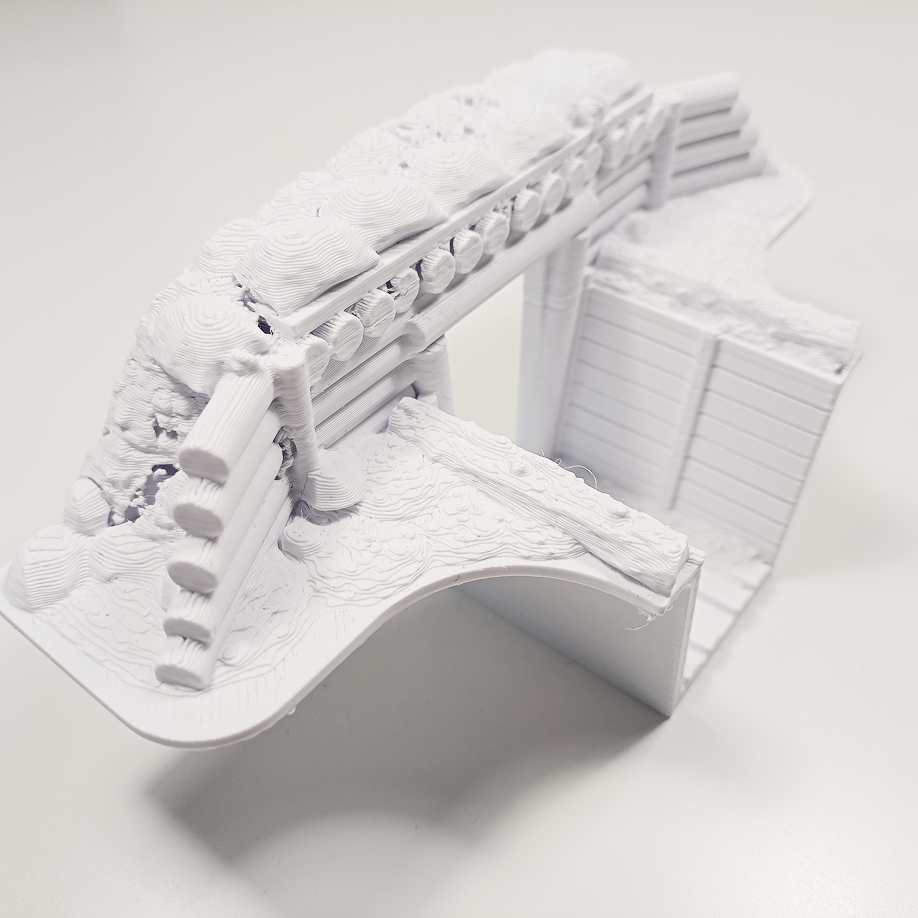
Resin holds tiny textures — rivets, cracks, sandbags, wood grain — extremely well. Modern 3D printing has almost caught up: resin 3D printers in particular produce crisp detail, and even filament prints look excellent once primed and painted. MDF looks clean and tidy but reads as “flat panels,” so many hobbyists add their own texture, sand, or filler to make it look natural.
If you want terrain that looks great in photos and up close, 3D printed or resin is the way to go.
Which terrain is the most durable?
3D printed terrain (in PETG or tough PLA) is usually the most drop-resistant for regular play. MDF is durable but can warp or snap at glue joints, and resin is the most likely to chip or crack if it falls.
This matters more than people expect. Terrain gets handled every game — picked up, knocked, packed away. Plastic 3D prints flex a little and survive drops that would chip resin. For terrain you’ll transport to a club or store, durability is a real advantage, and it’s one reason many players choose 3D printed scenery for everyday gaming.
Which terrain is cheapest?
MDF is normally the cheapest per piece, followed by 3D printed terrain, with resin the most expensive. But “cheapest” and “best value” are not the same thing.
MDF wins on raw price and is great if you need to fill a big table fast. However, you usually have to assemble and texture it yourself. 3D printed terrain sits in the sweet spot: more detailed than MDF, far cheaper than resin, and often sold as modular sets you can rearrange into a new layout every game — so one purchase covers many battlefields.
A simple comparison table
| Feature | 3D Printed | MDF | Resin |
|---|---|---|---|
| Detail | High | Low–medium | Highest |
| Durability | High (PETG/PLA) | Medium | Low (can chip) |
| Price | Medium | Lowest | Highest |
| Weight | Light–medium | Lightest | Heaviest |
| Assembly | Little or none | Glue & build | None |
| Modularity | Excellent | Good | Limited |
| Best for | All-round value | Big tables, budgets | Display & detail |
What scale of terrain do I need?
Most modern skirmish games use 28mm to 32mm miniatures, so 28mm terrain fits the widest range of games. Historical mass-battle games may use smaller scales like 15mm or 20mm.
Here’s a quick guide:
- 28mm / 32mm: most skirmish games. The most common and most useful scale to buy first.
- 20mm: Some WWII and historical games.
- 15mm: large historical battles, where you field many models on a smaller footprint.
When buying, look for terrain described as “compatible with 28mm models” — that wording tells you the doors, walls, and cover are sized for standard infantry.
Is 3D printed terrain good for Trench Games?
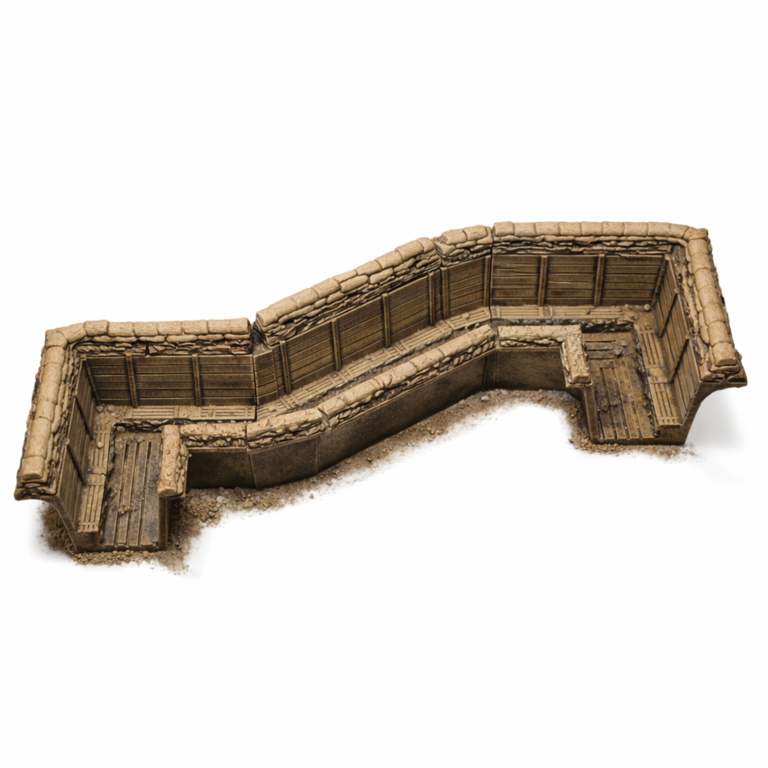
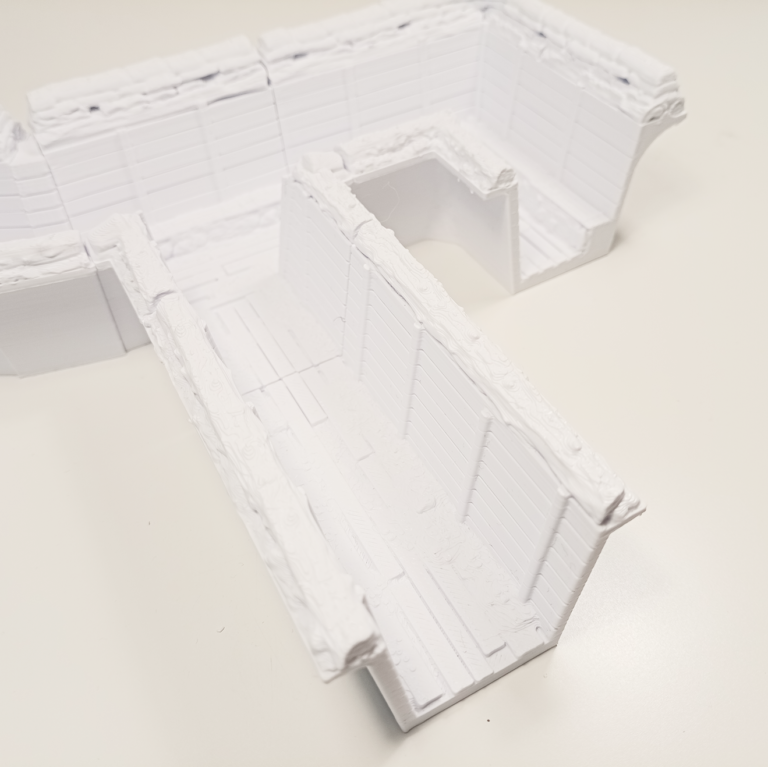
Yes — trench-warfare games are one of the best uses for 3D printed terrain. Trenches (see trench collection), sandbag walls, duckboards, barbed wire, bunkers, and shell craters are exactly the modular, repeatable pieces that 3D printing produces affordably.
Trench-style games have surged in popularity, and players need a lot of linked, rearrangeable cover to play them well. A modular trench set lets you build a different fortified line every game. The same pieces work across grimdark, historical, and sci-fi settings, so your collection stays useful no matter what you play next. (If you want to go deeper on building a trench board, see our guide to trench terrain and our piece on fortifications.)
Should I buy painted or unpainted terrain?
Unpainted terrain is cheaper and lets you match your own table; painted terrain saves time and is ready to play out of the box. Pick based on whether you enjoy painting and how fast you want to start.
Many players actually enjoy priming and drybrushing terrain — it’s quicker and more forgiving than painting miniatures, and a basic grey-and-brown scheme looks great in an afternoon. If you’d rather just play, pre-painted sets remove that step entirely. Some makers offer both options on the same product so you can choose.
How to choose: a 30-second decision guide
- You want the best all-round terrain for one game: buy a 3D printed modular set in your scale.
- You need to cover a big table cheaply: start with MDF and add detail yourself.
- You’re building a display board or want museum-level detail: invest in resin for the hero pieces.
- You play trench or ruins-heavy games: prioritise modular 3D printed trenches, walls, and craters.
If you can’t find the exact piece you need, a maker as me can print custom terrain to your size and theme — useful for objective markers, unusual buildings, or matching an existing collection. You can send me a custom request with a photo or sketch, and I will reply if I can do it for you and at what price. I draw all the models myself in software, so you can create truly custom realistic style scene.
Frequently asked questions
Yes. Terrain printed in PETG or tough PLA flexes slightly and survives the handling and occasional drops of regular play better than resin, which can chip.
28mm. It fits the widest range of popular skirmish games.
Usually yes. 3D printed terrain typically costs less than resin while offering similar detail, especially when bought as modular sets.
Yes. Custom 3D printing lets you order terrain in a chosen scale, theme, or size, which is helpful for objectives, unusual buildings, or matching terrain you already own.
No. You can buy pre-painted terrain ready to play, or unpainted terrain if you prefer to match your own colour scheme. Unpainted is cheaper.
Looking for modular, hard-wearing terrain in 28mm? Browse our ready-made terrain sets or request a custom piece — designed and printed in Finland, shipped across the EU.